
Safety
Choosing roof edge protection: when is it required, and class A, B or C?
· 6 min read
This explains the rules that apply in the Netherlands and Belgium.
If you can fall 2.5 metres or more, the fall risk must be removed, first with collective protection such as roof edge protection. Which edge protection you need depends on the roof pitch. The European standard EN 13374 has three classes: class A for flat and slightly pitched roofs up to 10 degrees, class B up to 30 degrees, and class C for steep roofs up to 45 degrees. With a small fall height on the roof, up to 2 metres, class B may go up to 45 and class C up to 60 degrees.
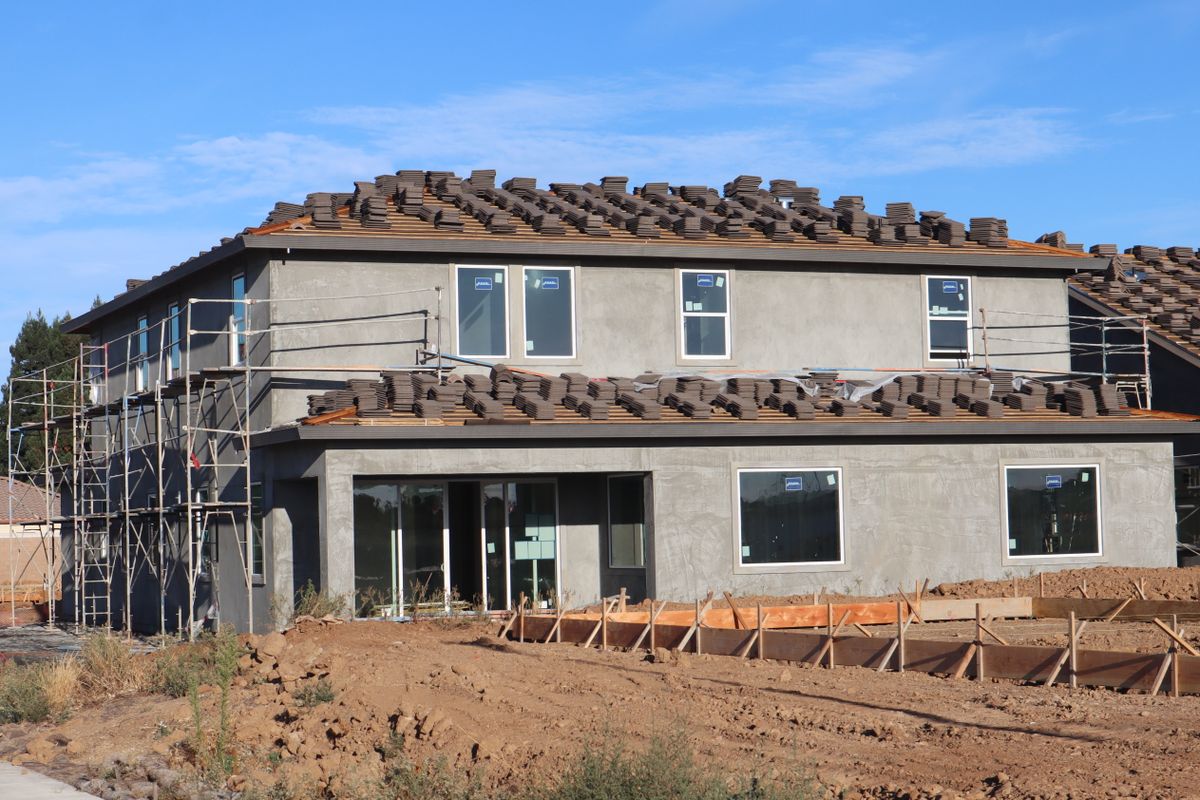
When is roof edge protection required?
In the Netherlands the fall risk must be removed as soon as you can fall 2.5 metres or more, and collective protection comes before personal protection such as a harness with a line (Working Conditions Decree, article 3.16). In practice:
- Flat roof: the Dutch Arbocatalogus for flat roofs works with distances from the edge. Within 2 metres of the edge a guardrail is needed, except for short work such as an inspection. More in our article on working on a flat roof.
- Pitched roof: according to the Dutch A-blad for pitched roofs, a scaffold or edge protection along the gutter is required once the work per house and roof surface takes more than 3 man-hours. See our article on working on a pitched roof.
- Belgium: the rules set no fixed height; the risk assessment decides. See working at height in Belgium.
Class A, B or C: what does it mean?
Temporary edge protection is tested to the European standard EN 13374. It has three classes, depending on how hard someone can hit it. The Roof Safety Systems manual summarises it in one diagram:
- Class A: static loads only: leaning and holding on. For flat and slightly pitched roofs up to 10 degrees.
- Class B: static and low dynamic loads: someone falling or slipping on a moderately pitched roof. Up to 30 degrees, or up to 45 degrees if the fall height on the roof is no more than 2 metres.
- Class C: high dynamic loads: someone sliding down a steep roof. From 30 to 45 degrees, or up to 60 degrees if the fall height on the roof is no more than 2 metres.
Fall height on the roof means how much height someone can lose along the roof surface before reaching the protection. When buying, check in the manual which class a set achieves, and at which pitch.
Flat or pitched roof: which system?
- Flat roof: a system with uprights on ballast, such as concrete blocks. Nothing is drilled into the roof. See the roof edge protection for flat roofs in our shop.
- Pitched roof: a system with uprights in the gutter and a barrier with toe board. The gutter, gutter brackets and facade must be strong enough. Many systems are not suitable for plastic gutters.
What to look out for
- Height: the top rail is at least 1 metre above the roof surface, measured at right angles.
- Toe board: must always be fitted; without it the system does not comply.
- Wind: in strong wind, take the protection down or stop work, as the manual prescribes.
- Inspection: check the parts before each use and have them inspected by a competent person every year.
- Assembly: during assembly and dismantling the protection is not yet in place, so use personal fall protection.
Frequently asked questions
From what height is roof edge protection required?
In the Netherlands the fall risk must be removed from a fall height of 2.5 metres, first with collective protection such as roof edge protection. On a pitched roof the Dutch construction sector also agreed: a scaffold or edge protection once the work per house and roof surface takes more than 3 man-hours.
Which class do I need for a flat roof?
For a flat or slightly pitched roof up to 10 degrees, class A to EN 13374 is sufficient. A steeper pitch needs class B or C.
Which class do I need for a pitched roof?
Up to 30 degrees class B, between 30 and 45 degrees class C. If the fall height on the roof is no more than 2 metres, class B may be used up to 45 degrees and class C up to 60 degrees.
Can roof edge protection be fitted to a plastic gutter?
Often not. Many systems for pitched roofs are only suitable for a solid roof edge or a zinc gutter with enough brackets. Check the manual of your system.
Does roof edge protection need to be inspected?
Yes. Check the parts before each use and have them inspected every year by a competent person, as manufacturers prescribe in their manuals.
Sources
- Dutch Working Conditions Decree, article 3.16 (Dutch)
- Arbocatalogus Platte Daken: fall risk (Dutch)
- A-blad Hellende daken (Volandis, 4th edition 2018; Dutch)
- RSS roof edge protection system manual (Roof Safety Systems: classes A, B and C of EN 13374, barrier height, toe board, inspection; Dutch)
- Belgian Code on well-being at work, Book IV, Title 5 (FPS Employment; Dutch)
This article is a practical explanation, not legal advice. Always follow the manual of your roof edge protection. Sources checked on 15 November 2026.
In our shop
- Fall protectionTemporary edge protection for flat and pitched roofs, spare parts and personal fall protection kits.View the range
- Mobile scaffold towersAluminium scaffold towers from Euroscaffold and Alumexx in various working heights, parts listed per set.View the range
- LaddersAluminium combination, extension, single, folding and telescopic ladders, with working height and weight.View the range